Floor protection fails in predictable ways: it shifts, it curls at the seams, or it traps grit and turns into sandpaper.
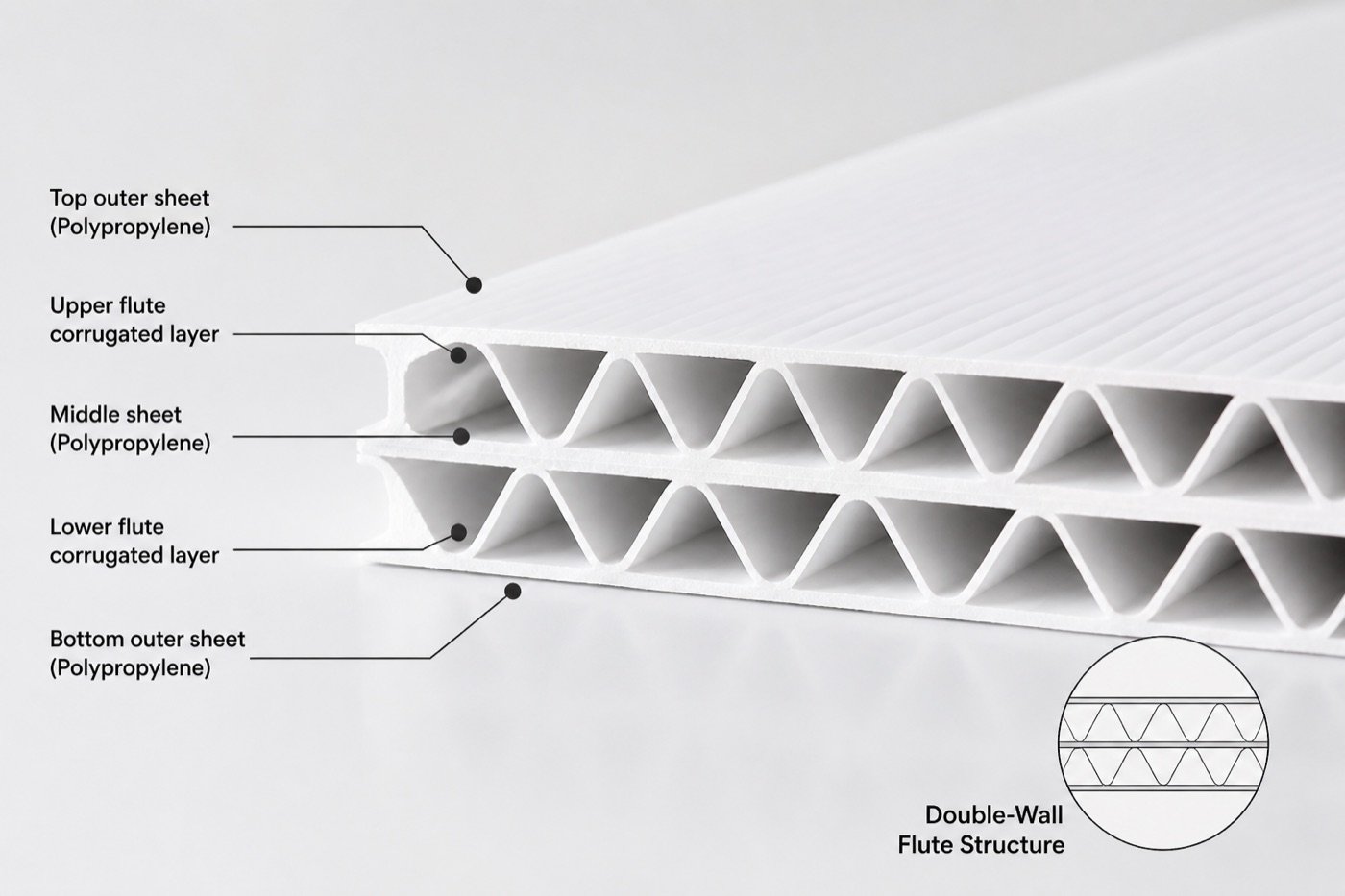
Corrugated PP handles the first two well because it lies flat and does not absorb water. The third is a housekeeping problem, and no panel solves it for you.
Laying it properly
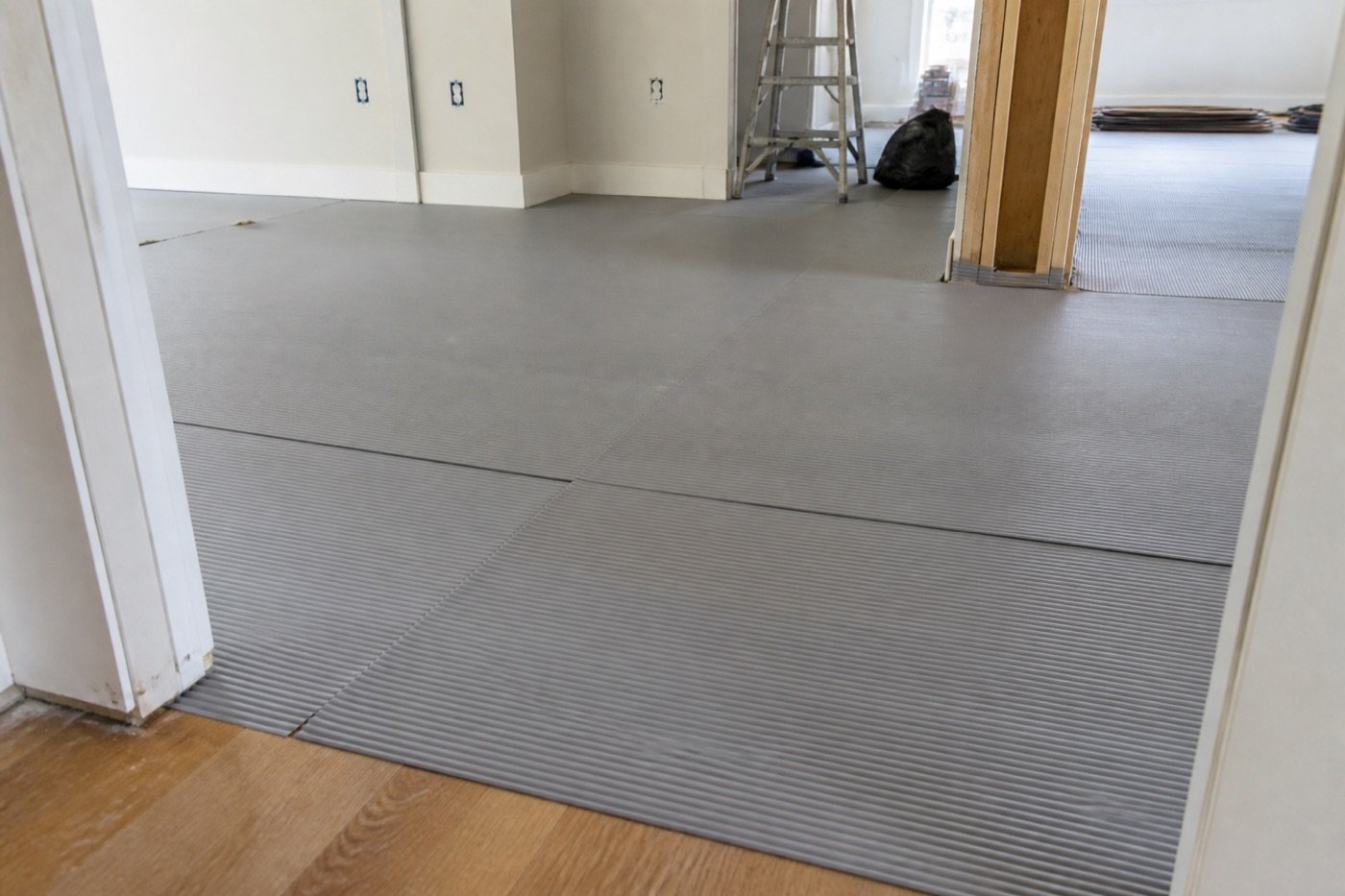
Run panels in the direction of main traffic so seams sit parallel to the flow rather than across it. Overlap or butt the edges tight, then tape the seam with a low-tack tape rated for the finished surface underneath. Tape to the panel, not to the floor.
Choosing a gauge
- 2 mm — light foot traffic, short duration, finished surfaces already sealed.
- 3–4 mm — general trade traffic through a normal fit-out.
- 5–6 mm — wheeled loads, material handling, longer programmes.
The part people skip
Sweep before laying, and sweep the top of the protection regularly. Grit under a panel will polish a floor as effectively as anything on site. The protection is only doing its job if what is beneath it stays clean.
Panels come up clean at the end of the programme and, if they were not cut to a one-off shape, go back out on the next job.