A fold in corrugated PP either becomes a hinge that survives thousands of cycles, or a crack that opens on the fifth. The difference is direction and depth.
Direction first
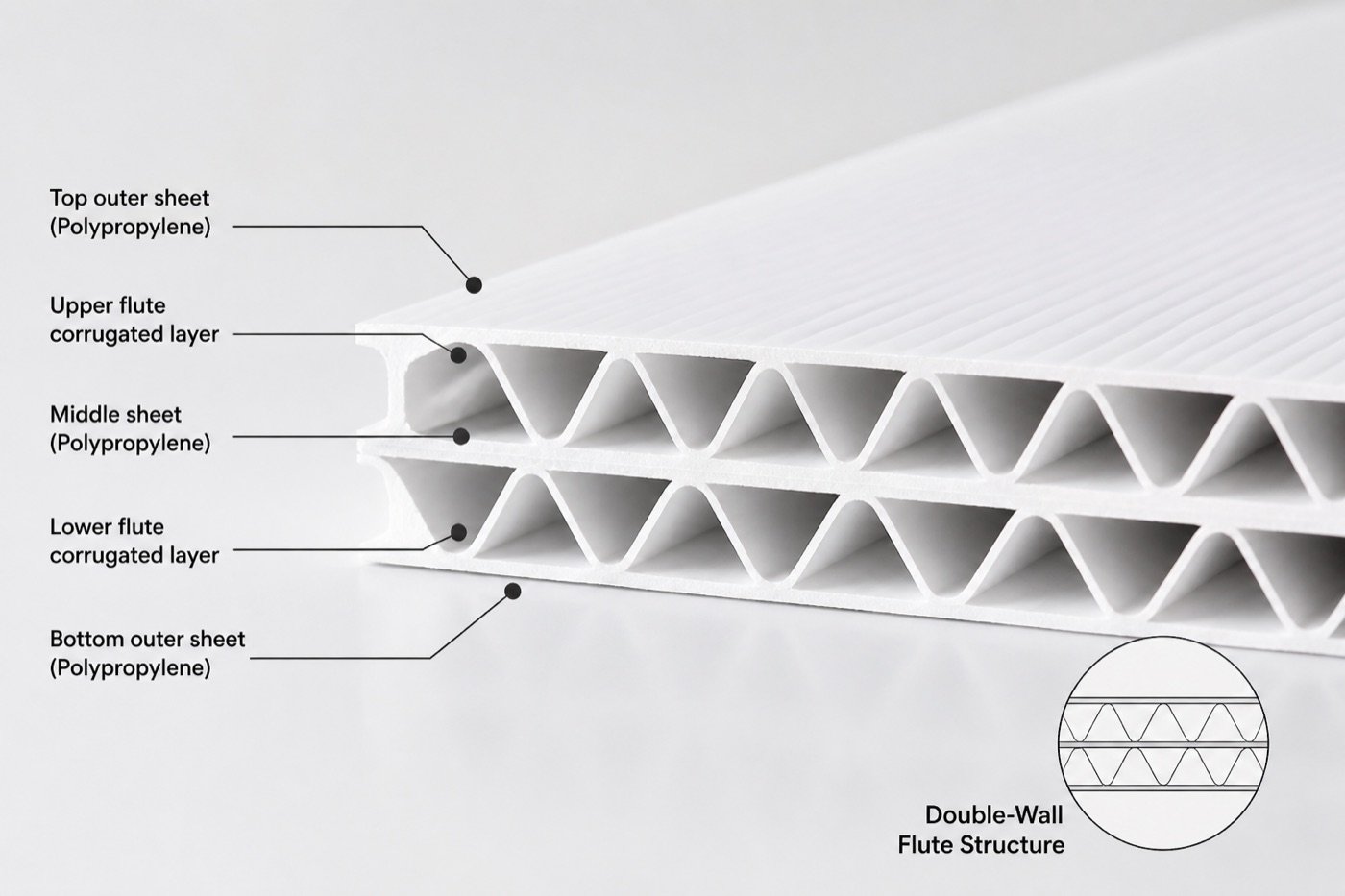
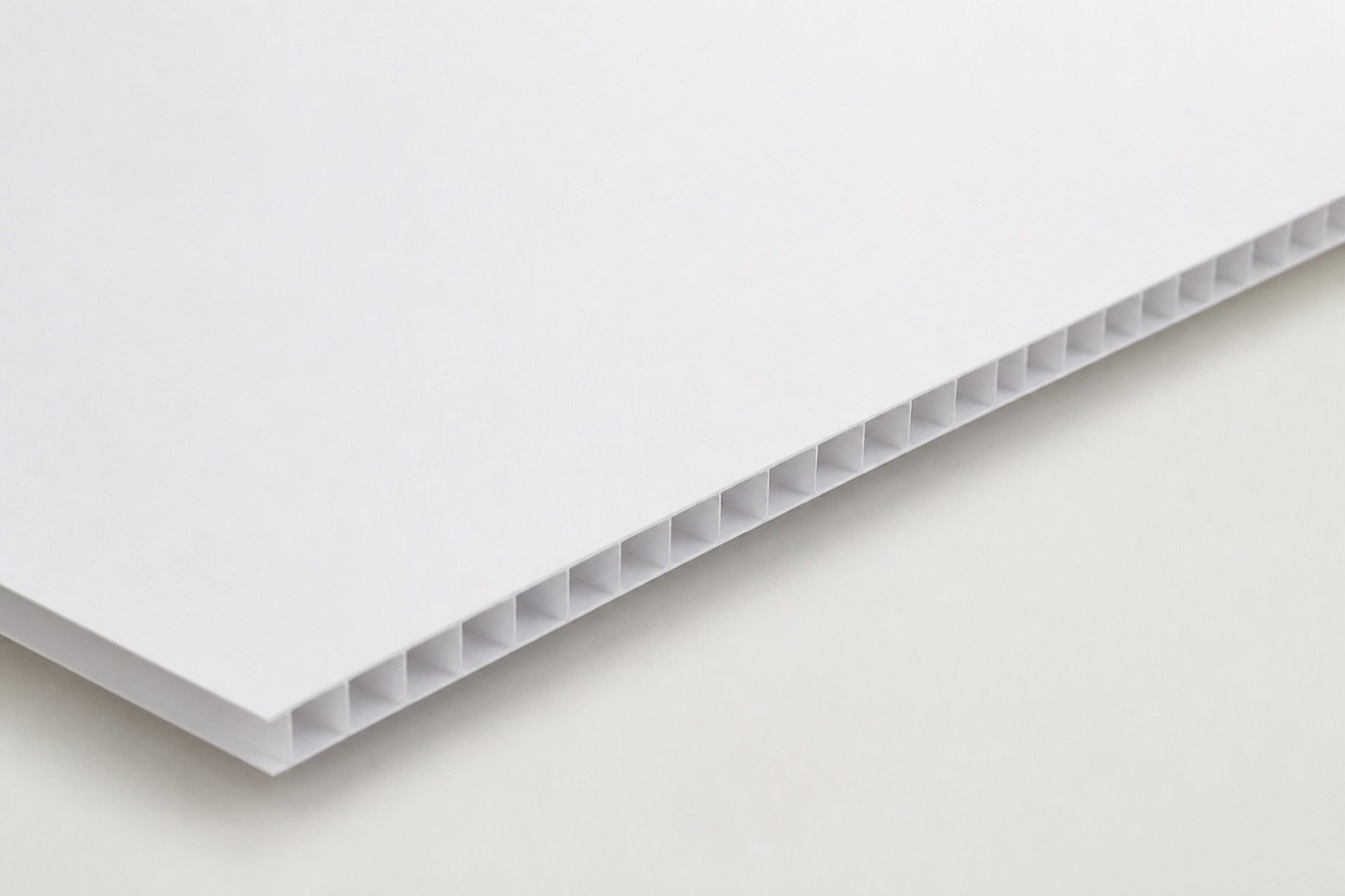
Score parallel to the flutes. A fold along the flute compresses the internal wall and creates a living hinge. A fold across the flutes crushes the structure and the outer skin splits at the crease, usually not immediately, which is what makes it a costly mistake.
Depth
The score should cut the near wall and stop. Going through the flute into the far wall removes the hinge entirely and leaves two loose panels. Too shallow and the panel resists the fold and bows either side of the crease. On thinner gauges the working window is small — test on offcuts from the same batch before running production.
Common mistakes
- Scoring both sides of the same crease, which removes all remaining material.
- Folding immediately at low temperature — cold material is less forgiving.
- Reusing a dull blade, which tears rather than cuts and leaves a ragged hinge.
- Designing a fold across the flute because the sheet layout was more efficient that way.
That last one is worth catching at the drawing stage. If your layout needs folds in both directions, tell us early — it usually changes how the blank should be nested, and it is a cheaper conversation before the run than after it.