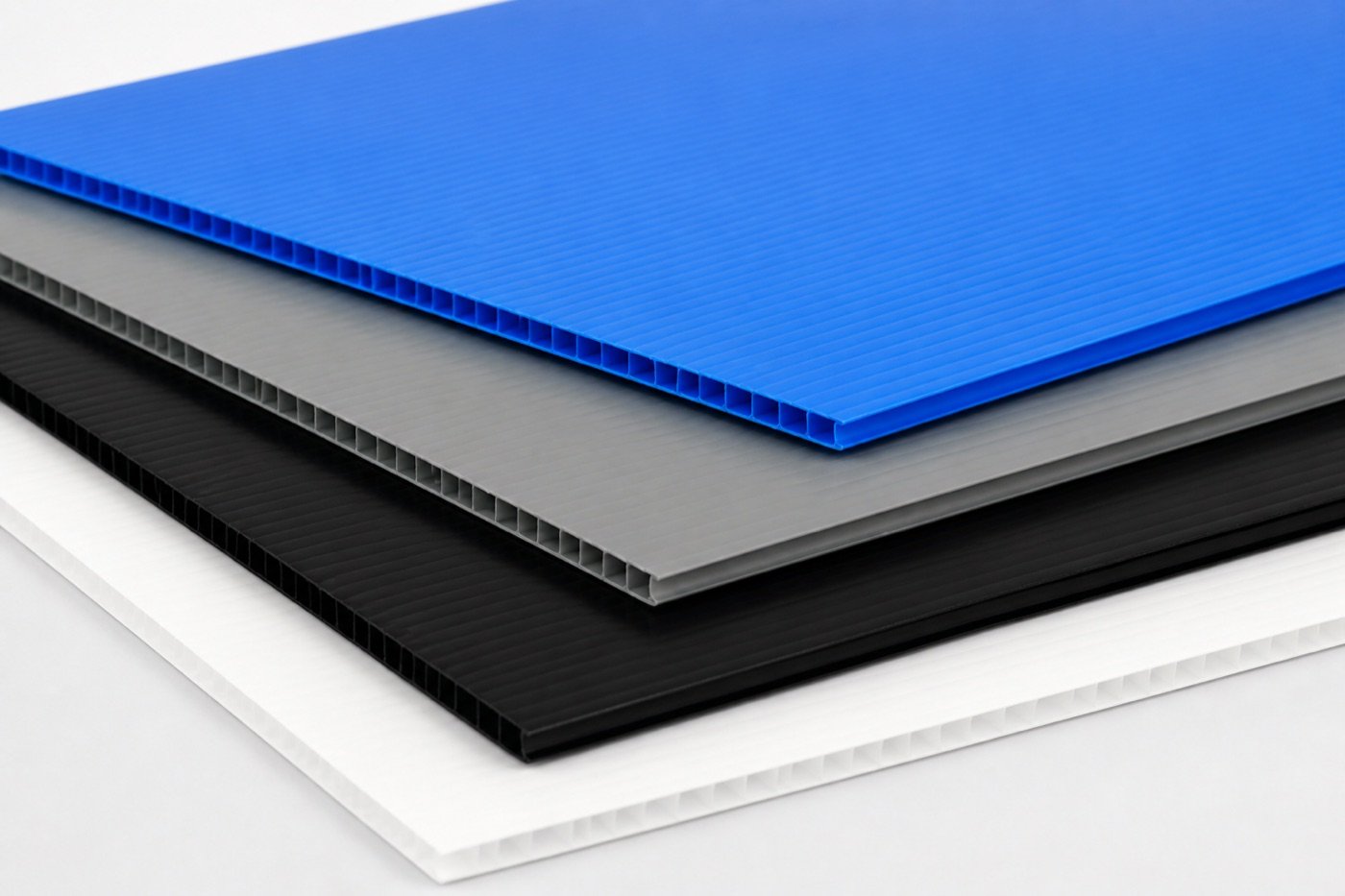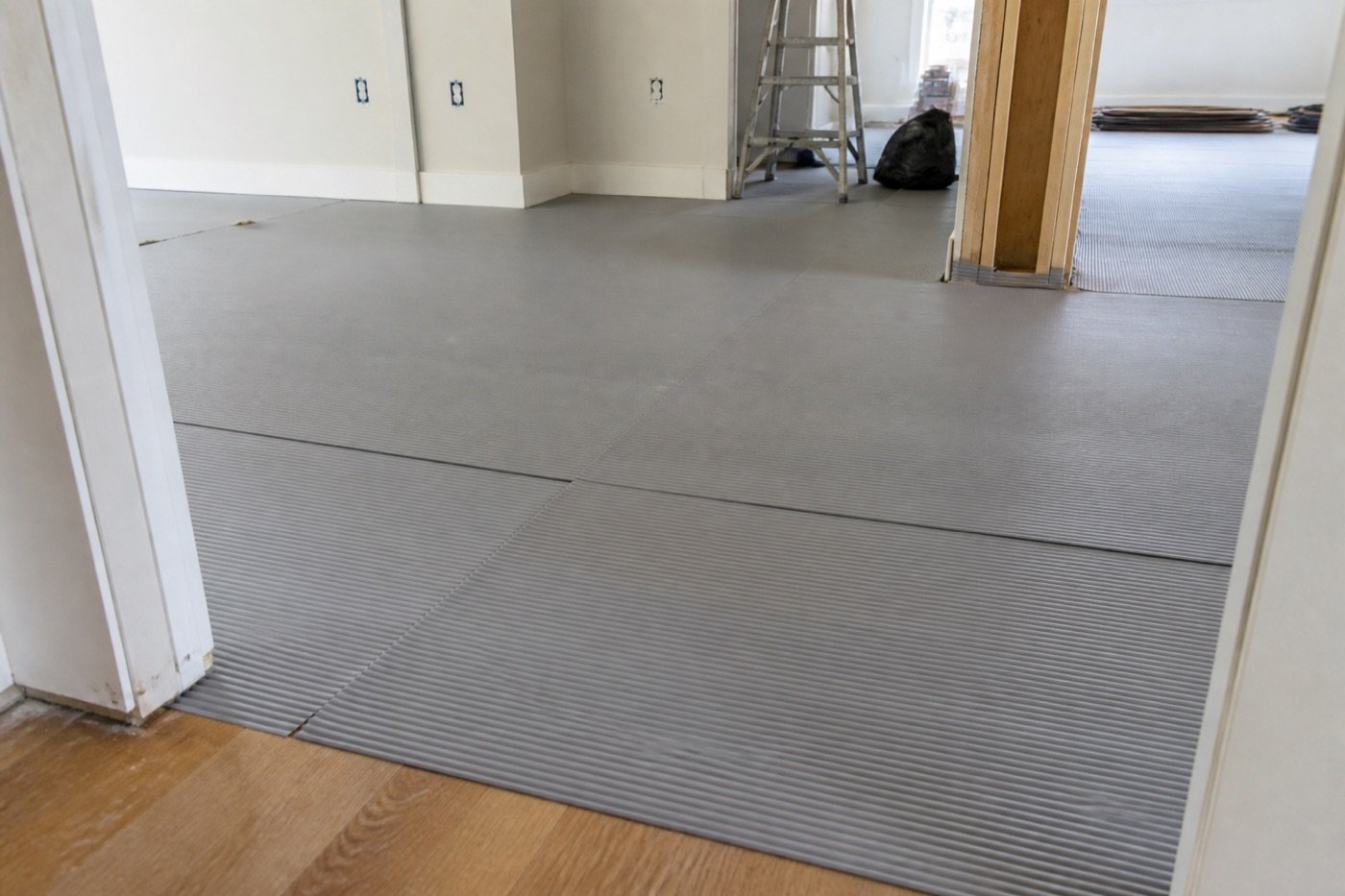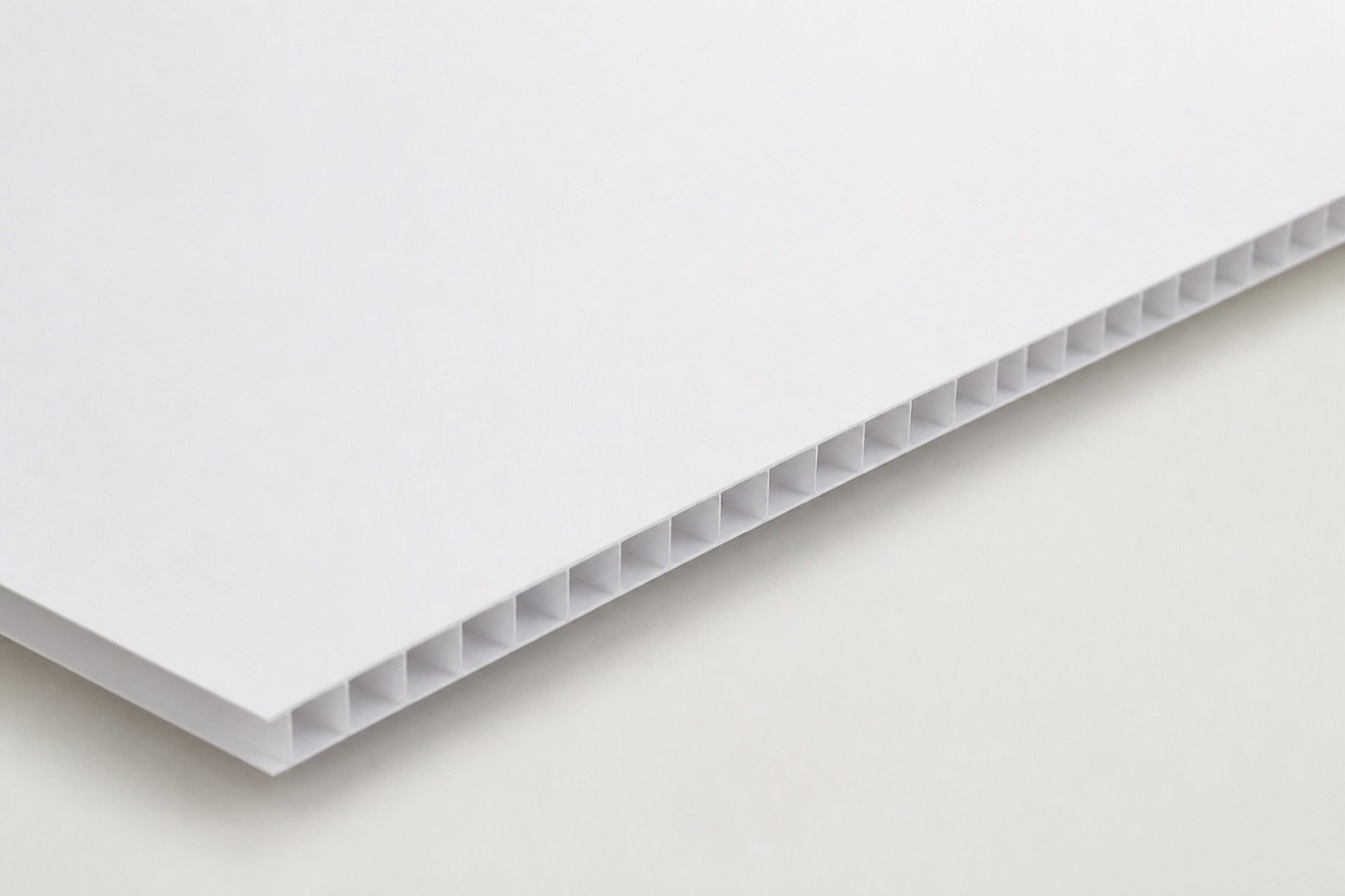
Thickness is the first question every customer asks and the one most often answered by habit rather than by load. Here is how we actually work it out.
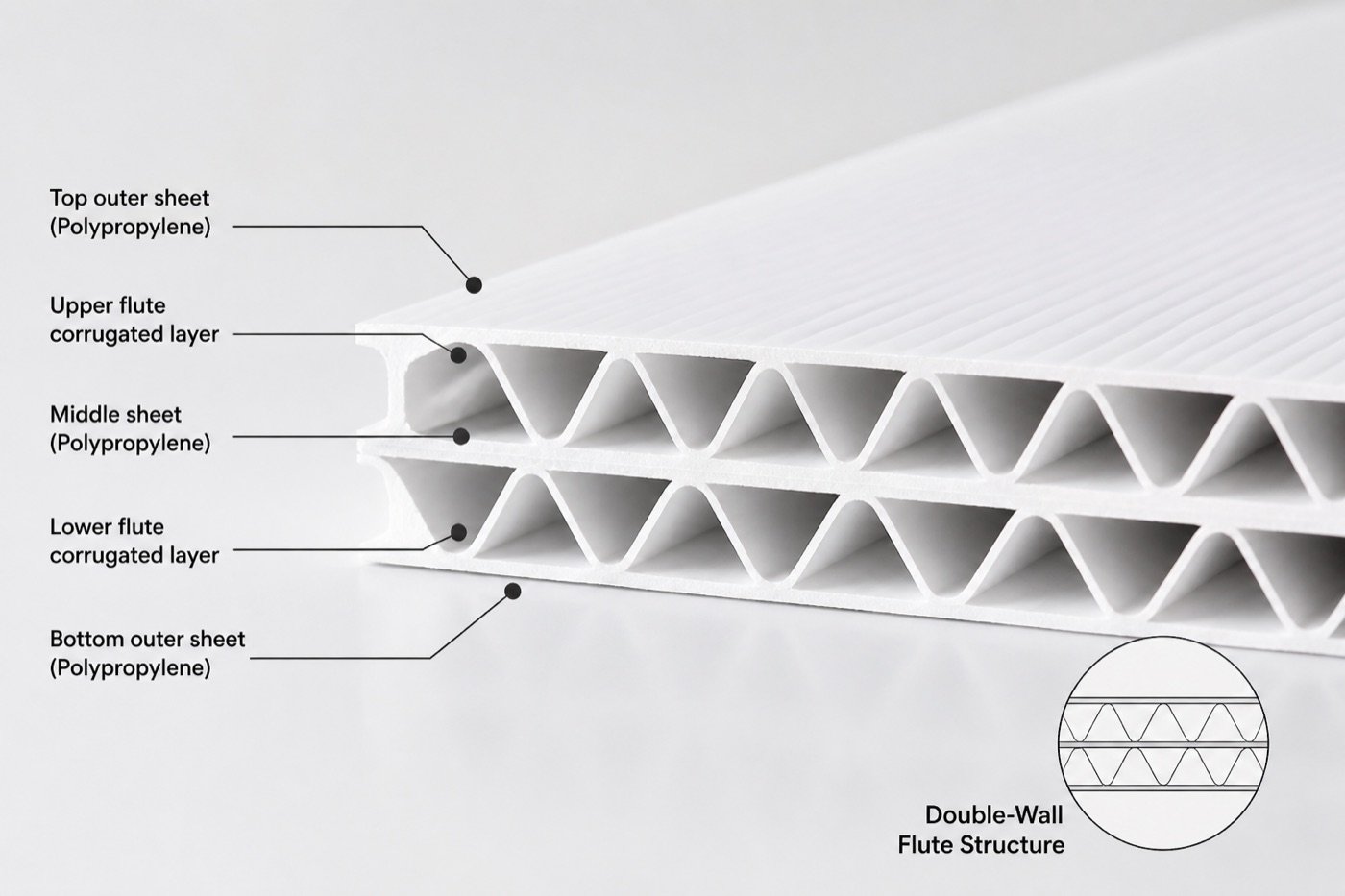
Corrugated polypropylene gets its stiffness from the flute wall between two outer skins, not from bulk. That means the jump from 2 mm to 4 mm is not a small increment — it changes how far the panel can span before it starts to bow under its own weight.
Start with span, not with weight
Most specification mistakes come from picking a gauge based on what the panel has to carry, when the real constraint is how far it has to reach unsupported. A 2 mm sheet held at two edges 400 mm apart is rigid. The same sheet at 900 mm is a hammock.
Before you choose, measure the longest unsupported run in the finished assembly. That number does more to set the gauge than the mass of whatever sits on top.
The working ranges
- 2 mm — light signage, short-term surface protection, mailer inserts.
- 3–4 mm — job site panels, packaging inserts, retail displays.
- 5–6 mm — heavier packaging, reusable totes, hoarding panels.
- 8–12 mm — pallet spacers and structural industrial work.
If a panel is going to be handled every day, go one step thicker than the calculation says. The failure is never the first week — it is month six.
Where flute direction matters more than gauge
For anything that folds, the flute direction decides whether you get a clean hinge or a cracked outer wall. Scoring parallel to the flutes gives a fold that survives repeat cycling; scoring across them does not. On a reusable tote that distinction outlasts any thickness decision.
If you are unsure, send us the span, the load, and how often it gets handled. We will come back with a gauge and a flute direction rather than a catalogue page.