Both materials get sold for the same jobs, and in a Quebec winter they do not behave the same way at all.
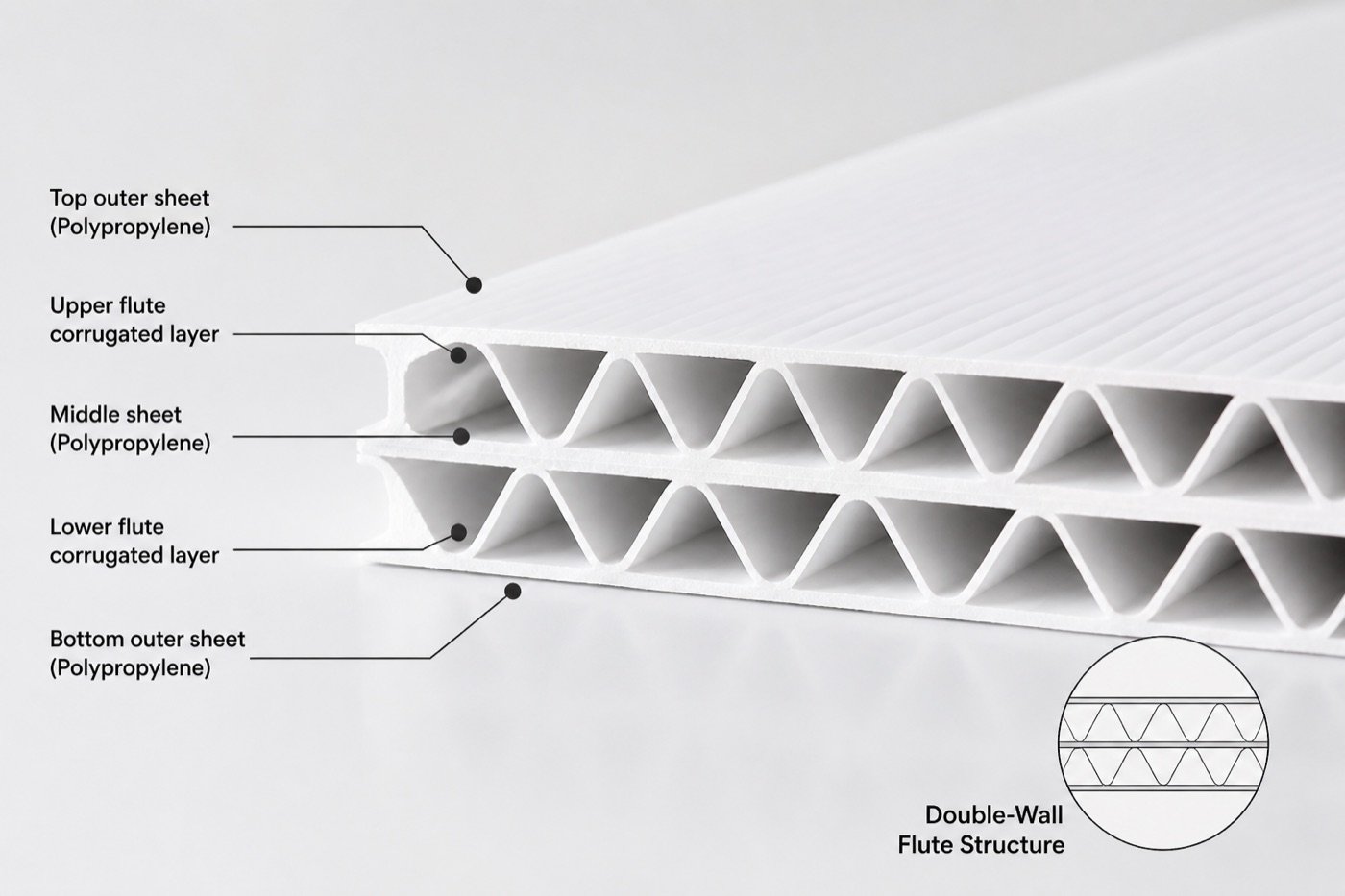
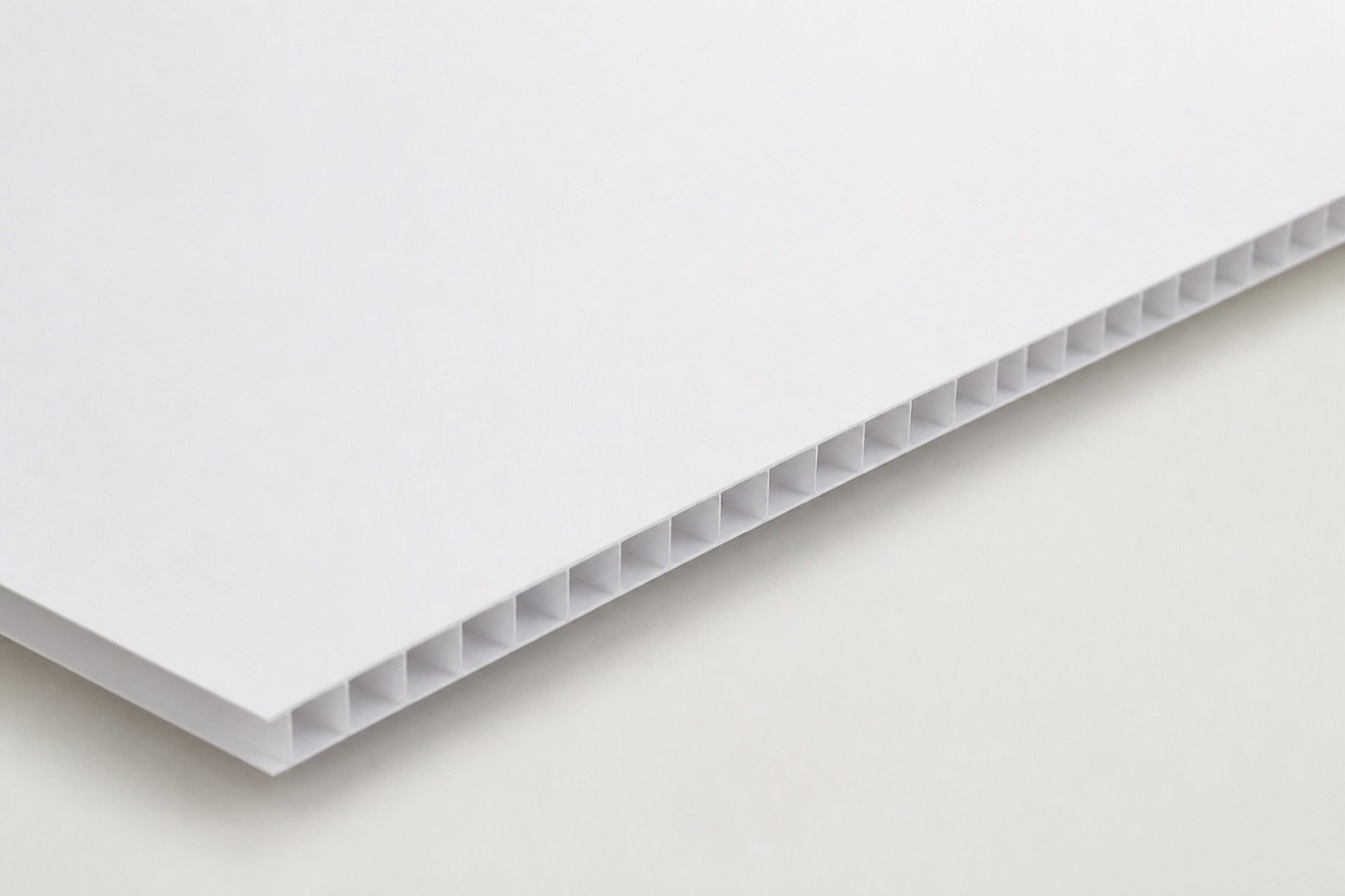
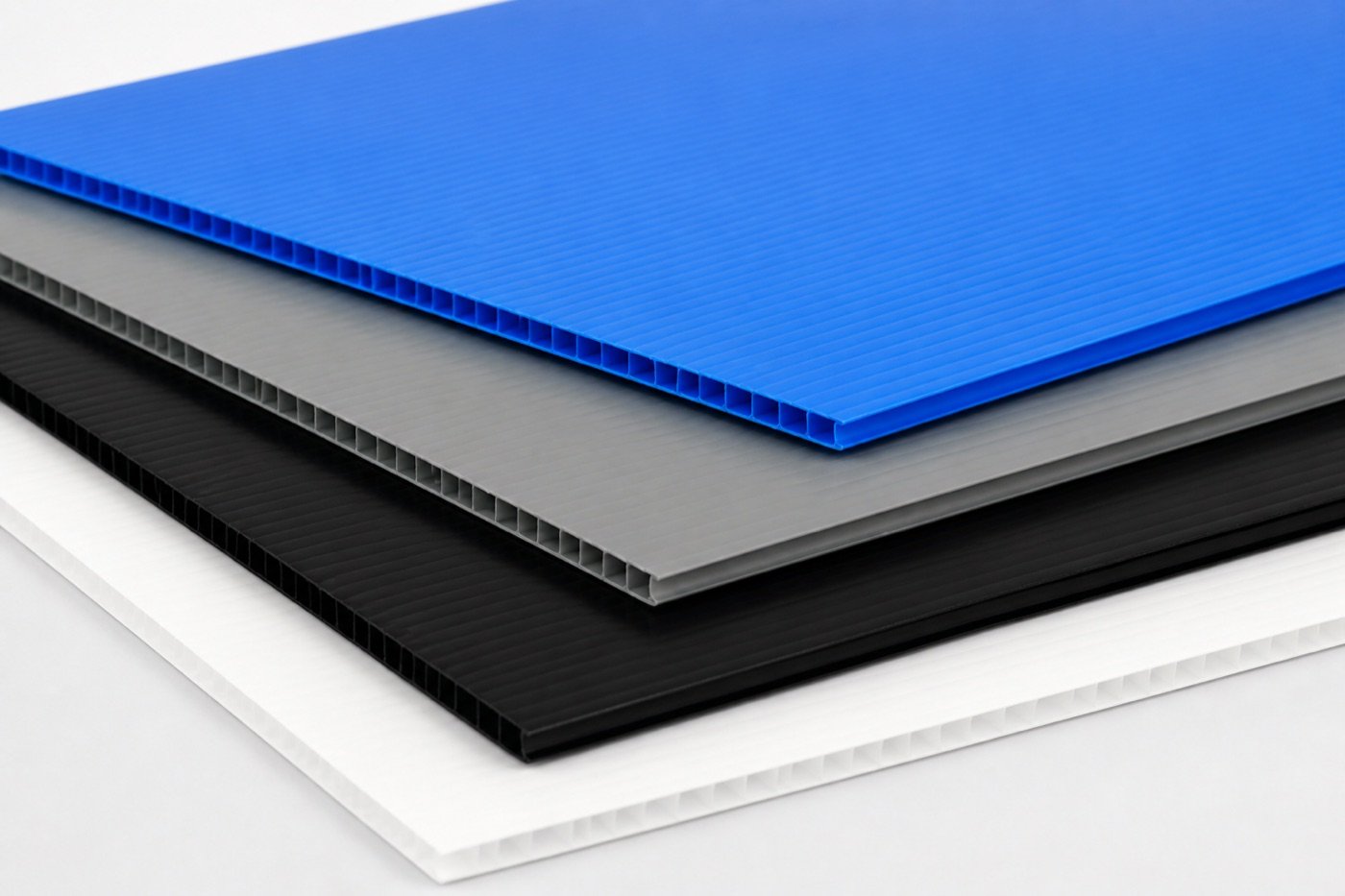
PVC foam board gives you a smoother, more rigid face and prints beautifully. Corrugated polypropylene gives you a lighter, more impact-tolerant panel that is fully recyclable. Neither is simply better — but the season narrows the choice.
What the cold actually does
Rigid PVC foam becomes more brittle as temperature drops. A panel that survives a summer install can crack at the fixing points when it takes a knock at minus twenty. Polypropylene stays comparatively tough further down the range; our published operating window runs to −10 °C, and grades exist below that — ask before assuming.
Moisture and freeze-thaw
PP corrugated absorbs effectively no water, so there is nothing in the flutes to freeze and delaminate the panel. That matters most for anything left outdoors through a full cycle of thaw and refreeze — hoarding, yard signage, exterior protection.
Where PVC still wins
- Permanent indoor displays where the smoother face is visible up close.
- Applications needing a flat rigid panel with no flute show-through under raking light.
- Thin-section work where you want rigidity without the corrugated profile.
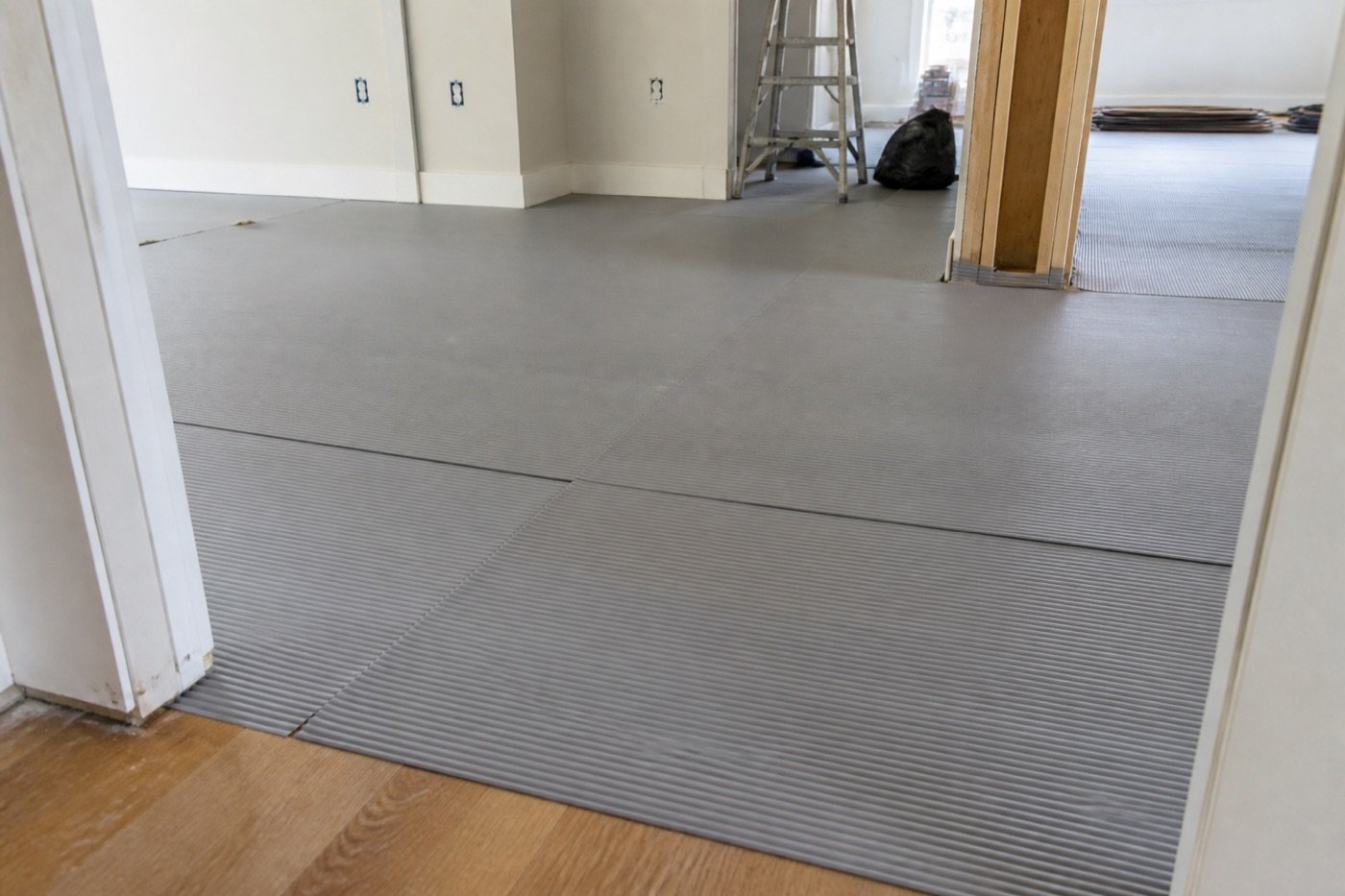
For temporary outdoor signage and any reusable packaging that lives on a loading dock, we recommend PP. For a permanent interior fixture, PVC may serve you better, and we will say so.